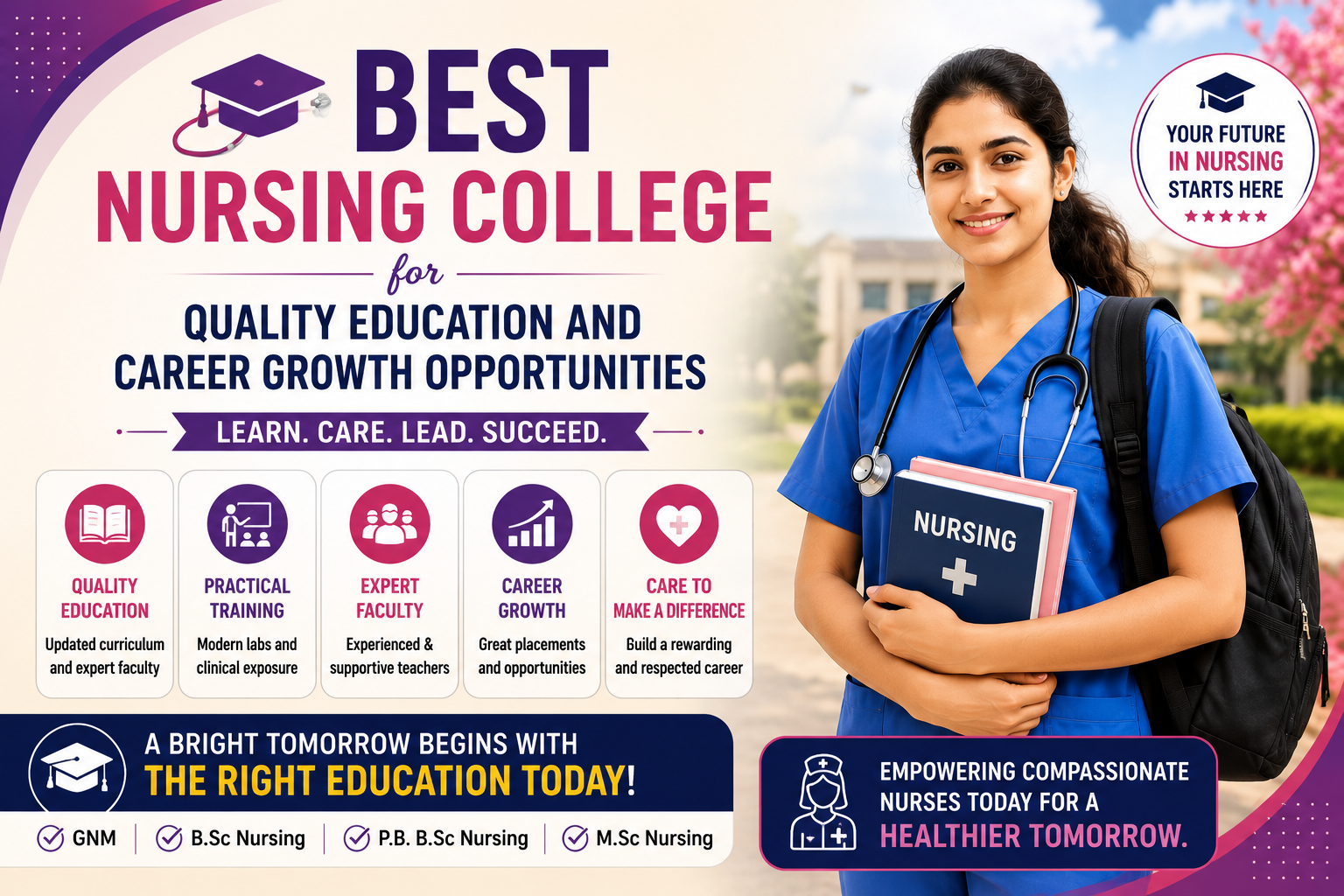
Nursing is one of the most important professions in the healthcare sector. Nurses work closely with patients, doctors, families, and other healthcare professionals to provide essential care and support. As the healthcare industry continues to expand, the demand for trained and compassionate nursing professionals is also increasing.
For students who want to build a stable and meaningful career in healthcare, choosing the right nursing college is an important first step. A quality institution can provide strong academic knowledge, practical clinical exposure, professional skills, and career guidance. Students searching for the Best Nursing College in Etawah should therefore consider more than just course fees or campus appearance before making their decision.
This article explains the key features that can help students identify a nursing college that supports quality education and long-term career growth.
Why Nursing Is a Promising Career Choice
Nursing offers students an opportunity to build a career while directly contributing to patient care and community health. Nurses are required in hospitals, clinics, community health centres, nursing homes, healthcare organisations, and various public health programmes.
The profession also offers opportunities for continuous learning. After completing an initial nursing qualification, students can pursue further education, specialised training, or advanced professional roles according to their qualifications and career objectives.
However, professional competence depends greatly on the quality of education and practical training received during the nursing course.
What Makes a Nursing College a Quality Institution?
Not every nursing college offers the same educational experience. A good institution should provide a balanced combination of classroom teaching, practical training, clinical exposure, experienced faculty, modern facilities, and student support.
When evaluating the Best Nursing College in Etawah, students and parents should consider the following factors.
1. Qualified and Experienced Faculty
Faculty members have a direct impact on students’ academic development. Experienced nursing educators can help students understand theoretical concepts and demonstrate how those concepts are applied in practical healthcare situations.
A strong faculty should encourage students to ask questions, participate in discussions, practise clinical procedures, and develop professional discipline.
Teachers should also help students improve communication, teamwork, critical thinking, and patient-care skills.
2. Comprehensive Nursing Curriculum
A well-designed curriculum is essential for developing competent nursing professionals. Students should receive education in subjects relevant to their chosen nursing programme.
Depending on the course, students may study areas such as:
- Anatomy and physiology
- Pharmacology
- Medical-surgical nursing
- Community health nursing
- Child health nursing
- Mental health nursing
- Nutrition
- Psychology
- Nursing research
- Nursing management
A balanced curriculum ensures that students develop the theoretical foundation necessary for their professional responsibilities.
3. Practical and Clinical Training
Nursing cannot be learned entirely through textbooks. Practical training is an essential part of nursing education because students need to develop confidence in performing procedures and interacting with patients.
A quality nursing college should provide opportunities for students to gain practical experience in suitable clinical environments.
Clinical exposure can help students understand:
- Patient assessment
- Nursing procedures
- Patient communication
- Infection-control practices
- Healthcare documentation
- Medication-related responsibilities
- Emergency-care procedures
- Team-based healthcare delivery
Regular practical exposure helps students transition more effectively from classroom learning to professional practice.
4. Modern Laboratories and Learning Facilities
Well-equipped laboratories allow nursing students to practise skills in a controlled learning environment. Before performing procedures in clinical settings, students can develop their understanding through demonstrations and supervised practice.
Important educational facilities may include nursing laboratories, anatomy and physiology laboratories, computer facilities, demonstration rooms, classrooms, and other academic resources.
A good library with nursing textbooks, reference materials, journals, and digital resources can further support students’ academic development.
5. Focus on Communication and Professional Skills
Nursing is a people-oriented profession. Nurses communicate with patients, relatives, doctors, technicians, and other healthcare professionals every day.
Therefore, students should develop:
- Effective communication
- Empathy
- Teamwork
- Patience
- Time management
- Problem-solving
- Critical thinking
- Professional ethics
A quality college should provide opportunities such as seminars, presentations, workshops, group activities, and practical sessions that help students build these skills.
6. Safe and Supportive Campus Environment
A comfortable learning environment is essential for students to focus on their education. Parents and students should assess campus safety, cleanliness, discipline, student support, and general facilities before admission.
For girls, safety and security may be especially important considerations. Students and parents can enquire about campus security, hostel arrangements, transportation, supervision, emergency procedures, and other safety measures.
A supportive environment can help students become more confident and independent throughout their educational journey.
7. Hostel and Transportation Facilities
Students travelling from other towns or villages may require accommodation and transportation. A well-managed hostel can provide convenience and allow students to concentrate on their studies.
When evaluating hostel facilities, students should consider cleanliness, food, security, room arrangements, study areas, supervision, and emergency support.
Transportation facilities can also be valuable for students who need to travel between the college and clinical training locations.
8. Career Guidance and Professional Development
Education should prepare students not only for examinations but also for their professional careers. Career guidance can help nursing students understand employment opportunities, further education, professional development, and interview preparation.
A college that encourages students to participate in workshops, seminars, skill-development programmes, and professional activities can help them become better prepared for the workplace.
Students should also ask about the institution’s approach to internships, placements, and career counselling.
9. Opportunities for Further Education
Healthcare is constantly evolving, and nurses can continue developing their knowledge throughout their careers.
After completing the appropriate nursing qualification, students may explore higher education, specialised courses, professional certifications, teaching, administration, research, or other career pathways depending on eligibility and professional regulations.
A college that encourages lifelong learning can help students prepare for long-term professional growth rather than focusing only on completing a single course.
10. Placement and Employment Support
Placement support can be an important consideration for students entering professional education. While employment ultimately depends on an individual’s qualifications, skills, eligibility, and available opportunities, institutional career support can help students understand the recruitment process.
Students can ask about:
- Recruitment drives
- Hospital collaborations
- Career counselling
- Interview preparation
- Resume-building assistance
- Internship opportunities
- Alumni career progression
Such support can make the transition from education to employment more structured.
Nursing Career Opportunities After Graduation
Nursing graduates can explore employment opportunities across different areas of healthcare. Depending on their qualification and eligibility, career options may include roles in:
Hospitals
Hospitals are among the largest employers of nursing professionals. Nurses may work in general wards, intensive care units, operation theatres, emergency departments, maternity units, paediatric departments, and other specialised areas.
Community Healthcare
Community health programmes provide opportunities to work in preventive healthcare, health education, maternal and child health, vaccination programmes, and public health initiatives.
Private Healthcare Organisations
Private hospitals, clinics, nursing homes, and healthcare centres also require trained nursing professionals to provide patient care and support.
Teaching and Academic Roles
With appropriate higher qualifications and experience, nursing professionals can explore teaching and academic opportunities.
Healthcare Administration
Experienced professionals with suitable qualifications may also explore healthcare management and administrative responsibilities.
How to Choose the Best Nursing College in Etawah
Parents and students should create a checklist before selecting a nursing college. Consider the following:
Academic quality: Examine the curriculum, faculty, teaching methodology, and learning resources.
Clinical exposure: Ask where students receive practical and clinical training and how frequently they participate.
Infrastructure: Visit classrooms, laboratories, libraries, and other facilities.
Recognition and affiliation: Verify the institution’s applicable recognition, affiliation, and programme approvals.
Safety: Evaluate campus and hostel security arrangements.
Career support: Ask about internships, placement assistance, counselling, and professional development.
Student environment: Observe discipline, faculty interaction, student support, and overall campus atmosphere.
Affordability: Compare tuition fees and additional expenses with the facilities and educational opportunities provided.
Visiting the campus personally and speaking with current students can provide useful information before making a final decision.
Why Quality Education Matters in Nursing
Nurses have significant responsibilities because their work directly affects patient care. Strong education helps students develop the knowledge, practical abilities, professional behaviour, and ethical awareness needed to perform those responsibilities effectively.
Quality nursing education can also build confidence. Students who receive regular practical exposure and guidance are better positioned to understand real-world healthcare environments and respond professionally to different situations.
Conclusion
Choosing the right nursing college is an important investment in a student’s future. The Best Nursing College in Etawah should offer more than classroom education. It should provide qualified faculty, practical and clinical training, modern learning facilities, professional development opportunities, a safe environment, and guidance for future career growth.
Students and parents should research colleges carefully, verify recognition and affiliation, visit campuses, compare facilities, and understand the complete course structure before making a final decision.
With the right education, practical skills, professional values, and continuous learning, aspiring nurses can build rewarding careers while making a meaningful contribution to the healthcare sector. Selecting a quality nursing college can therefore be the first important step towards a confident, competent, and successful nursing career.
Leave a Reply